Showing posts with label Kathmandu. Show all posts

Sunday, 17 April 2016

Khokana Village - NEPAL


Everyone wants to lead a peaceful, happy life, but happiness and success aren’t measured by how much money you have, but by whether you have inner peace in your heart (Dalai Lama)

My Journey to Khokana Village Nepal


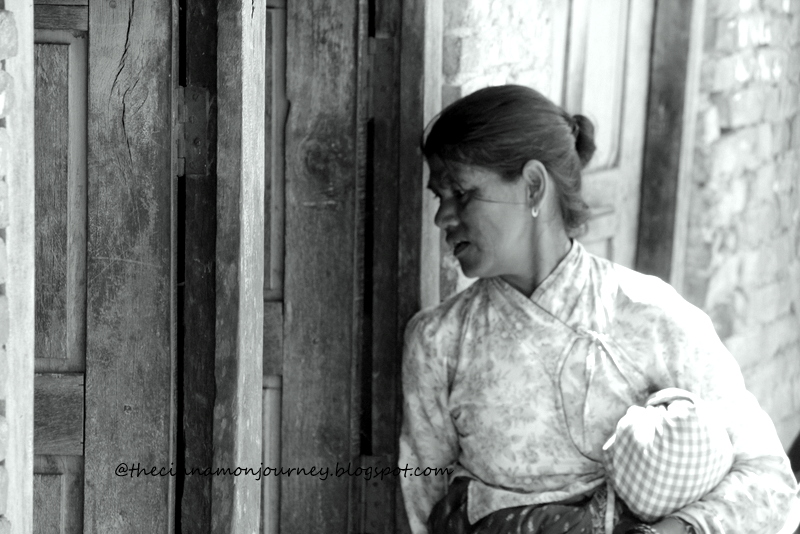
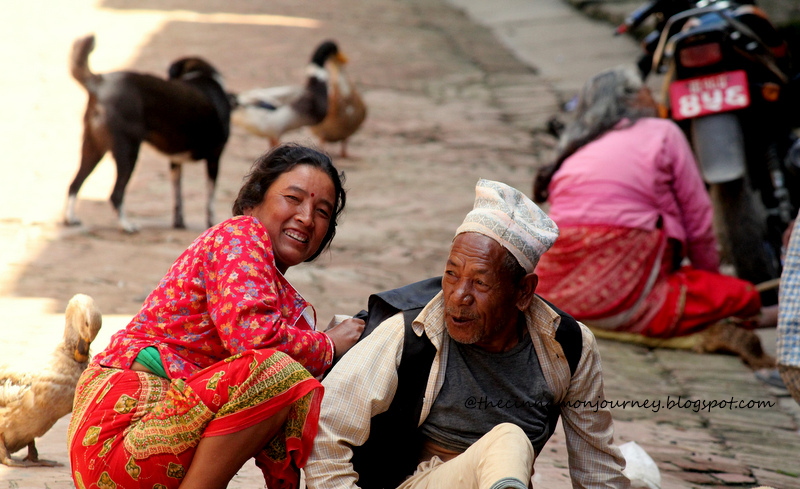
Khokana Village is a traditional and tiny Newari village about 8 km south of Kathmandu. To get there you need to rent a car or ask your hotel for tour package (around 35$). The village is open for public and quiet place to visit.


Sunday, 28 June 2015

Swayambhunath Stupa Kathmandu NEPAL


Swayambhunath is an ancient religious complex atop a hill in the Kathmandu Valley, west of Kathmandu city. It is also known as the Monkey Temple as there are holy monkeys living in the north-west parts of the temple. 


The stupa has Buddha's eyes and eyebrows painted on. Between them, the number one (in Devanagari script) is painted in the fashion of a nose. The site has two access points: a long stairway with 365 steps, leading directly to the main platform of the temple, which is from the top of the hill to the east; and a car road around the hill from the south leading to the southwest entrance.


According to Swayambhu Purana, the entire valley was once filled with an enormous lake, out of which grew a lotus. The valley came to be known as Swayambhu, meaning "Self-Created." The name comes from an eternal self-existent flame (svyaṃbhu) over which a sūpa was later built.

They monkey are holy because Manjushri, the bodhisattva of wisdom and learning was raising the hill which the Swayambhunath Temple stands on. He was supposed to leave his hair short but he made it grow long and head lice grew. It is said that the head lice transformed into these monkeys. Manjusri had a vision of the lotus at Swayambhu and traveled there to worship it.


Seeing that the valley can be good settlement and to make the site more accessible to human pilgrims, he cut a gorge at Chovar. The water drained out of the lake, leaving the valley in which Kathmandu now lies. The lotus was transformed into a hill and the flower became the Swayambhunath stupa. 


The dome at the base represents the entire world. When a person awakes (represented by eyes of wisdom and compassion) from the bonds of the world, the person reaches the state of enlightenment. The thirteen pinnacles on the top symbolize that sentient beings have to go through the thirteen stages of spiritual realizations to reach enlightenment or Buddhahood. 

There is a large pair of eyes on each of the four sides of the main stupa which represent Wisdom and Compassion. Above each pair of eyes is another eye, the third eye. It is said that when Buddha preaches, cosmic rays emanate from the third eye which act as messages to heavenly beings, so that those interested can come down to earth to listen to the Buddha.


The hellish beings and beings below the human realm cannot come to earth to listen to the Buddha's teaching, however, the cosmic rays relieve their suffering when Buddha preaches. 

Each morning before dawn hundreds of Buddhist (Vajrayana) and Hindu pilgrims ascend the 365 steps from eastern side that lead up the hill, passing the gilded Vajra (Tibetan: Dorje) and two lions guarding the entrance, and begin a series of clockwise circumambulations of the stupa.


That's all my memory of Syambhunath Stupa visit before the earthquake come. I'm not sure how the stupa look like now.

I found the video about the stupa after the earthquake, 

May All Beings without exception be released from suffering and find true happiness and everlasting peace...

Sunday, 26 April 2015

Let's Pray for NEPAL

"A magnitude-7.8 earthquake centered less than 50 miles from Kathmandu rocked Nepal with devastating force Saturday, toppling homes, temples and historic buildings and leaving at least 3000 ++ people dead..."

Stay strong NEPAL

You all in my prayers now..

Monday, 20 April 2015

Reciting Blessing inside The Boudhanath Stupa - Kathmandu, Nepal

"Blessings are everywhere, take time to notice and enjoy them.."


They burn the incense stick, and offer deep bow to all of life, they start "pradaksina" (clock walking meditation), the right hand touch the prayer wheels at the stupa wall and the left hand hold the "mala"(the prayer beads).

They recite "Om mani padme hum" ...

Om purifies bliss and pride -realm of the gods-, Ma purifies jealousy and need for entertainment -realm of the jealous gods- , Ni purifies passion and desire -human realm-, Pad purifies ignorance and prejudice -animal realm-, Me purifies greed and possessiveness -realm of the hungry ghosts-, Hum purifies aggression and hatred -hell realm-.... (Boudhnath Stupa , 8.00 AM )


Address : Boudhanath (Boudha), Kathmandu 44600, Nepal
Phone:+977 1-4256909
Ticket :Rs 150 (foreigners), Rs 40 (SAARC)
Best time to visit : early morning or late afternoon.

Monday, 13 April 2015

1000 Face @ Pashupatinath Temple , Kathmandu - NEPAL

"...I say, follow your bliss and don’t be afraid, doors will open where you didn’t know they were going to be. Wherever you are - if you are following your bliss - , you are enjoying that refreshment, that life within you, all the time ..." (Pashupatinath - Kathmandu)


Pashupatinath is the important place for pilgrim to visit while they are around Kathmandu. This temple is considered one of the sacred temples of Hindu faith .The temple serves as the seat of the national deity, Lord Pashupatinath. Located on the banks of the Bagmati River 5 kilometres north-east of Kathmandu Valley in the eastern city of Kathmandu.

There are many legends describing as to how the temple of Lord Pashupatinath came to existence here. My fav is the legend about Shiva and Parvati. In the past Lord Shiva and his wife Parvati came to the Kathmandu Valley and rested by the Bagmati while on a journey.


Shiva was so impressed by its beauty and the surrounding forest that he and Parvati changed themselves into deers and walked into the forest. Many spots in the Kathmandu Valley are identified as places where Shiva went during his time as a deer. After a while the people and gods began to search for Shiva.

Finally, after various complications, they found him in the forest, but he refused to leave. More complications ensued, but ultimately Shiva announced that, since he had lived by the Bagmati in a deer's form, he would now be known as Pashupatinath, Lord of all animals. It is said that whoever came here and beheld the lingam that appeared there would not be reborn as an animal.


The area of Pashupatinath imcompasses 264 hectre of land including 518 temples and monuments. Temple security(Armed Police Force Nepal) is selective regarding who is allowed entry into the inner courtyard . Practicing Hindus and buddhist of Indian and Tibetan descent are only allowed into temple courtiyard . Practicing Hindus of western descent are not allowed into the temple complex along with other non Hindu Visitors.


And me..?

I'm not lucky enough,the security just come and try to talk nepali language with me, when i can't answer anything, than they ask me to pay the ticket and stop me to enter the main temple :(. Maybe because i dress like a tourist and bring my camera.
So i just walk around the wall, and try to capture all the religious activity there from the distance with my lens.

I can feel, strong faith around here. All chant the mantra, burn the fire and send the prayer to the Lord. Even it's crowd around the main temple, but you can try walk down to the cremation river "bagmati", and see how peaceful it is.


If you like the old culture, the spiritual activity object and just to see how the local "nepali" pray, i recomend this place to be "must visit" list. But if you are not , better if you not come here.

I stay here for an hours. 1000 different face caught my eye . The people, the animal, and the prayer that fluttered around Pashupatinath .

Here we go, Pashupatinath Temple from My Lens :)


Address: Pashupati Nath Road, Kathmandu.
Opening Hours: 4:00 am – 12:00 pm, 5:00 – 9:00 pm
Entry Ticket : 1000 Nepali Rupee
Function: Hindu temple